Here is the list of previous year’s research projects and mentors. For more information, please click on the individual project numbers.
2023 Projects and Mentors






- Research Project 1: Conversion of biological waste into value-added products through microbial bioprocessing
- Research Project 2: Investigating the Circular economy and bioeconomy initiatives in food systems: Food loss and waste modeling, and digitalization approaches
- Research Project 3: Identify Genetic Basis of Quality Traits Through Gene Editing and Machine Learning Approaches
- Research Project 4: Innovative Approaches to Enhancing Cowpea Varieties
- Research Project 5: Multi-faceted sustainable seafood supply chain management practices and economics
- Research Project 6: Utilization of Decision Support System for Agrotechnology Transfer (DSSAT) for sustainable crop modeling and integrated management pathways
- Research Project 7: Agent-based modeling to measure and monitor household food loss and waste
- Research Project 8: Consumer perceptions and attitudes of the sustainable food “bio-inks” utilized in 3D food printing
- Research Project 9: Smart sensing systems to identify in-field spatial variability of cropping factors
- Research Project 10: Designing high-throughput phenotyping methods to characterize salt-tolerant genotypes of Brassicaceae
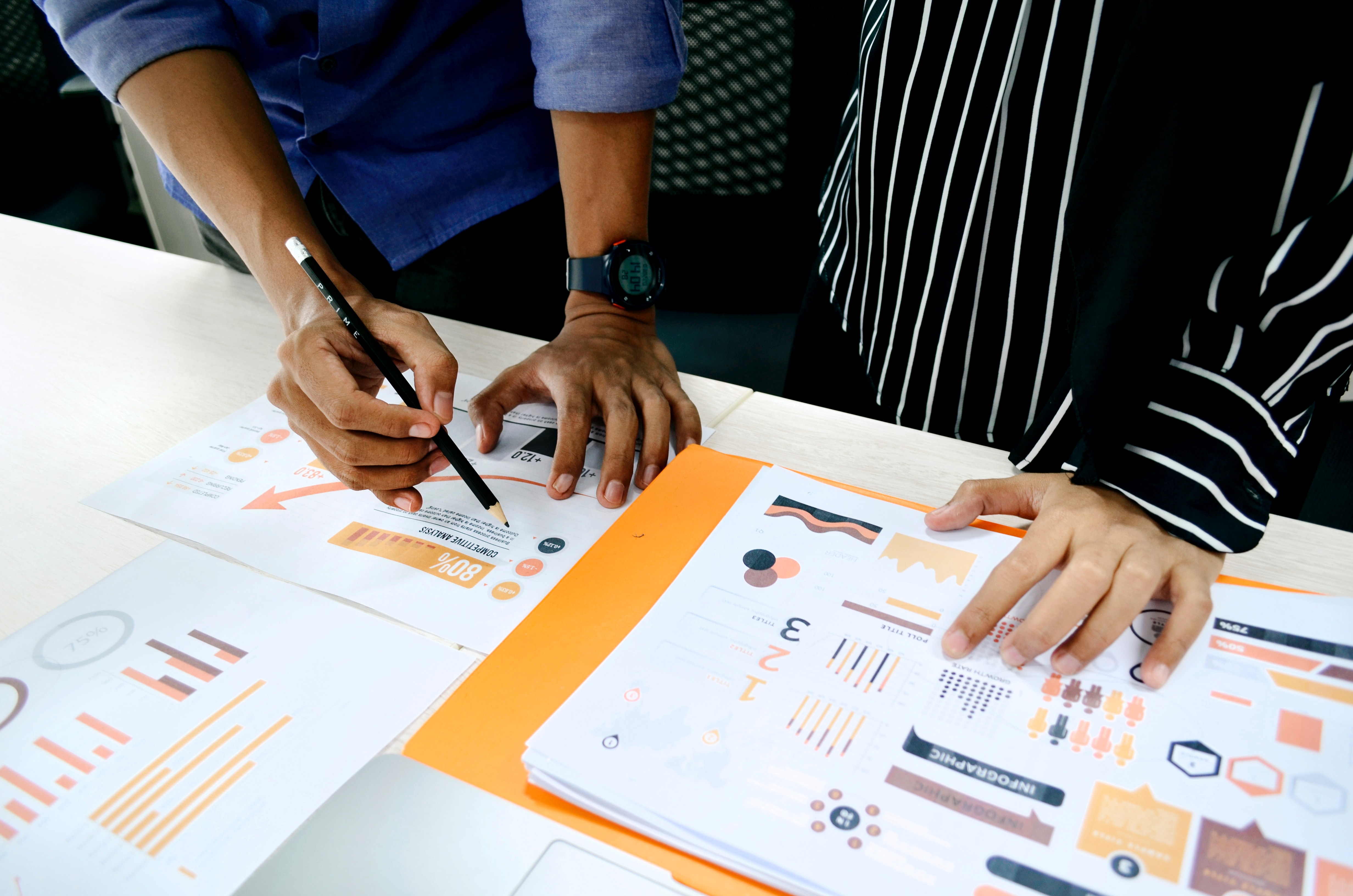
2023 Research Mentors and Projects features 10 University of Florida IFAS and Global Food Systems Institute Affiliated Faculty
Research Project 1: Conversion of biological waste into value-added products through microbial bioprocessing

Dr. Ana Martin Ryals, Agricultural and Biological Engineering Department
The reuse of waste materials is critical to support sustainable development. Organic wastes represent a significant and underutilized set of resources that can be leveraged to produce bio-based products such as bioenergy, nutrients, and biomaterials to support a circular bioeconomy. This research experience will investigate the conversion of organic wastes into value-added products through microbial processing such as anaerobic digestion or algae production. It will include lab work, and data analysis, with the opportunity for modeling and computer programming. Some prior lab experience, such as a chemistry or biological lab, would be preferred but is not required.
Research Project 2: Investigating the Circular economy and bioeconomy initiatives in food systems: Food loss and waste modeling, and digitalization approaches
Dr. Ziynet Boz, Agricultural and Biological Engineering Department
Circular economy and bioeconomy have been included in business and governmental initiatives due to the advantages associated with resource utilization and waste minimization, new technologies, job creation, etc. The agri-food industries stand to gain a lot from the widespread adoption of circular economies. It is necessary to identify the gaps in the literature, research, and efforts related to food systems. Food loss and waste minimization and management measures specifically tied to circular economy projects, as well as Industry 4.0 tools to support the green transformation, are all progressing at the same time. The aim of this study is to locate ongoing research and implementation programs, background information, and existing literature, as well as to build a database of US circular economy and bioeconomy initiatives. The REEU participant will identify the potential opportunities and gaps in the literature while producing a scoping assessment and database analysis of the circular bioeconomy program in the US and EU. The findings will be discussed in national gatherings like IFT FIRST and ASABE AIM, and they will be published in peer-reviewed journals. The information and tactics will aid in educating the stakeholders interested in the transformation of the food systems and circular agriculture.
Research Project 3: Identify Genetic Basis of Quality Traits Through Gene Editing and Machine Learning Approaches
Dr. Tie Liu, Horticultural Sciences Department
Fresh fruits and vegetables are invaluable for human health, but their quality deteriorates during distribution before reaching consumers due to ongoing biochemical processes and compositional changes. The current lack of any objective indices for defining the “freshness” of fruits or vegetables limits our capacity to control product quality and leads to food loss and waste. In this work, we will undertake interdisciplinary research to address plant science challenges related to food security and human health. It will leverage plant physiology, machine learning technologies, and genomics tools to understand the deterioration of fresh produce. We, therefore, propose a comprehensive research program to identify genes, proteins, and compounds as “freshness indicators” and to aid the development of an innovative and easy-to-use accessibility tool to accurately estimate the freshness of produce. The goal of the proposed research will advance in both basic research and applied science. Such a tool would allow a new level of postharvest logistics, supporting the availability of high-quality, nutritious, fresh produce.
Research Project 4: Innovative Approaches to Enhancing Cowpea Varieties

Dr. Esteban Rios, Agronomy Department
Cowpea (Vigna unguiculata [L.] Walp.) is a resilient crop critical for the nutrition and income of millions of families in the tropical and subtropical world. It has a rich history in the southeastern U.S., where it has been grown for centuries. Due to its drought and heat tolerance, it holds great potential to warrant food security under changes in climate and emerging pests. Emerging abiotic and biotic stresses affecting cowpea production are imminent threats to our food system, therefore, we must develop new varieties with genetically diverse germplasm sources.
The UF Forage Breeding Lab is dedicated to improving cowpea lines that can thrive in an ever-changing climate and resist biotic barriers. In summer 2023, we have interesting projects that will allow students to gain hands-on experience in various scientific procedures and methods. It is not intended that the undergrad student will be in charge of the three studies, but they will be exposed to a broad range of methods and techniques. The student will be able to select the project that best suits their interest for the presentation at the end of the program.
First, the student will be trained on plant screening for resistance to nematodes in a greenhouse trial. We aim to carry out a genome-wide association study to find genes associated with nematode resistance, and then cross-resistant and susceptible lines to develop a population for QTL mapping. Second, seed protein content in cowpea is very important to provide nutrition to millions of consumers, and as such, we plan to investigate protein content in diverse germplasm. In this project, we will compare conventional wet chemistry methods with near-infrared reflectance (NIR) spectroscopy to optimize measurement methods and develop NIRS equations for seed protein in cowpea. We will also conduct a genome-wide association study to find genes associated with seed protein in cowpea. The last study aims to prioritize maintaining the genetic purity of available germplasm for use in further breeding. This year, in collaboration with the USDA, we will systematically multiply 80 lines, ensuring genetic purity and preventing admixtures in post-harvest handling.
The student will be invited to present a poster during the UF Plant Breeding retreat at the end of July. Mentors will provide guidance on abstract writing, data analysis, and poster presentation. Additionally, co-authorship in a manuscript resulting from their work in this internship will be offered.
Research Project 5: Multi-faceted sustainable seafood supply chain management practices and economics
Dr. Frank Asche, Forest Resources and Conservation
Due to resource shortages and rising consumer demand, sustainable management of the seafood supply chain is a serious challenge. The REEU student will participate in a multidisciplinary research environment where the research focuses on various supply chain levels, with a focus on: I The interactions between fisheries and aquaculture and the ecosystem where production is conducted, including the effect external factors that can enhance or challenge sustainability, such as management systems, productivity growth, and increased demand (ii) How new supply networks and rising demand affect both the industrial system and the markets it serves. The expanding seafood trade is particularly significant in this perspective. (iii) How changing consumer preferences, such as the need for products with eco-labels, segment markets while trade deepens market integration. The results will be presented in peer-review publications.
Research Project 6: Utilization of Decision Support System for Agrotechnology Transfer (DSSAT) for sustainable crop modeling and integrated management pathways
Dr. Gerrit Hogenboom, Agricultural and Biological Engineering Department
Crop quality, resource use, and management strategies are becoming more and more crucial, but they are complicated for growers due to interactions between climate, region, environment, genotype, and crop management. However, further development is needed to simulate quality aspects. Decision support tools, such as computer models that simulate crop growth and development, can help optimize production. The Decision Support System for Agrotechnology Transfer (DSSAT), a crop modeling tool used by many scientists and other individuals with an interest in systems analysis and decision support, is the main tool that will be utilized in this study. Some examples are incorporating DSSAT systems in combination with gene-based modeling, cultivar selection, climate variability and change, water resource management, economic and environmental sustainability, and food and nutritional security, etc. The REEU student will work with an interdisciplinary group of crop modeling researchers. Peer-reviewed articles based on the findings will be published.
Research Project 7: Agent-based modeling to measure and monitor household food loss and waste
Dr. Greg Kiker, Agricultural and Biological Engineering Department
Household food waste (FW) constitutes the highest percentage of total food loss and waste in many low- and high-income settings. Even though important, monitoring, measurement, and prediction of the total weight and composition are tedious due to complex consumer decisions and types of foods and recipes involved. Systems modeling approaches such as agent-based modeling can provide an additional option to FW measurement approaches. Therefore, objective of this research is to develop an agent-based model to represent the demographics and waste generation dynamics of a city. The cognitive models of the agents will be established based on the well-defined consumer behavioral theories and case studies will be generated. The tools developed from this research are expected to aid decision-making for food waste reduction and management practices. The results of this study will be presented at national food waste conferences such as ReFED and Waste Expo, and published in peer-review journals.
Research Project 8: Consumer perceptions and attitudes of the sustainable food “bio-inks” utilized in 3D food printing
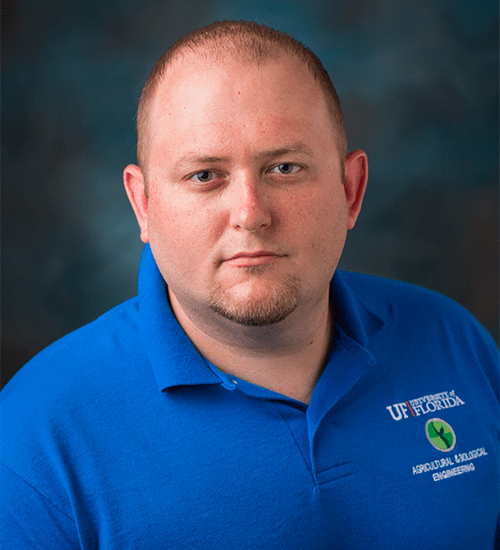
Dr. Adam Watson, Agricultural and Biological Engineering Department
Three-dimensional (3D) printed food is prepared through an automated additive manufacturing process. Cartridges are filled with ‘bio ink’ in the form of an edible paste, puree, powder, dough, liquid, and even semi-solid ingredients (e.g., chopped meats and vegetables) and deposited or extruded in a variety of shapes or forms. 3D printing allows for using exactly the right amount of ingredients, so little food is waste. Furthermore, the demand for customized food has increased as consumers search for healthy options; however, there is little information about consumers’ awareness of 3D printed food products and the technology used to manufacture them. Under the supervision and mentorship of Dr. Watson, students will perform literature review to assess the current body of knowledge related to 3D printed foods, administer a brief questionnaire, and conduct semi-structured interviews to understand consumers’ awareness (knowledge and experience) of 3D printed food. Students will collect quantitative and qualitative data and perform analyses (descriptive statistics, cross tabulation, correlation, regression, etc.). Findings generated from this research will add valuable insights into consumers’ decision-making process and overall acceptability of 3D printed foods and technologies.
Research Project 9: Smart sensing systems to identify in-field spatial variability of cropping factors

Dr. Wonsuk “Daniel” Lee, Agricultural and Biological Engineering Department
Precision agriculture, or smart farming, takes advantage of in-field spatial variability of many different cropping factors, such as soil type, soil pH, fertility, moisture content, crop vigor, disease, maturity status, and yield. To identify in-field spatial variability, many intelligent sensing systems are needed. With the advances in artificial intelligence (AI) and electronics, more sensing technologies became available for crop production. However, still, such sensing systems are not currently available for different cropping factors and are very much in need by the growers. This research will focus on developing such sensing systems so that the growers can easily adopt and utilize them for their crop management to increase yield and profit. Current projects include (1) strawberry flower, fruit, and canopy volume detection using a ground robot, drones, and AI, (2) strawberry plant wetness detection using AI and machine vision, and (3) two-spider spotted mites (TSSM) detection using smartphones and deep learning.
Research Project 10: Designing high-throughput phenotyping methods to characterize salt-tolerant genotypes of Brassicaceae

Dr. Melanie Correll, Agricultural and Biological Engineering Department
Climate change is causing saltwater intrusion into many agricultural fields in the Southeast. This is reducing the availability of fresh water. High salinity water damages crops and reduces yields, threatening regional food supplies. However, there are treatment options to reduce these salts and crops can be selected and bred for salt tolerance. This REEU builds off a project to study water treatment technologies developed at Clemson University with that of USDA/Clemson breeding program for developing salt-tolerant genotypes of Brassicaceae (e.g., mustard). Here, at the University of Florida, REEU students will work a team of researchers to collect data on the effects of salinity on a selected set of genotypes of crops for salt tolerance (i.e., phenotyping). Students will utilize tools in image processing, sensor suites, and those for Controlled Environmental Agriculture to collect physiological traits such as biomass, transpiration, photosynthesis, and nutrient content of crops. The data collected will inform that water treatment engineers and the crop breeders on performance of cultivars and water technologies while also designing methods for management of food production with saline water.
 USDA NIFA CD-Skills REEU